The Event: GitHub Actions Experiencing Repeated Outages
Yet again, developers worldwide found themselves staring at stalled pull requests and frozen deployment pipelines. As reported by The Register, GitHub Actions suffered another notable outage, disrupting the software delivery life cycle (SDLC) for thousands of engineering organizations.
For modern DevOps and SRE teams, CI/CD is no longer a luxury—it is the operational backbone. When a platform like GitHub Actions goes down, it doesn't just delay feature releases; it blocks critical security hotfixes, halts infrastructure-as-code (IaC) updates, and can silently break scheduled maintenance tasks (like database backups or compliance reports) running via cron workflows.
The SRE Dilemma: The Danger of Silent Failures
Most organizations treat CI/CD and cloud dependencies as 'always-on' utilities. This creates two distinct operational blind spots:
- Silent Cron Failures: Many engineering teams configure cron jobs within GitHub Actions to run essential utility scripts (e.g., daily database cleanups, security scans, or metric aggregations). If GitHub Actions experiences an outage, these tasks fail silently. You won't get a 'failed job' alert because the runner never spun up in the first place.
- Alert Fatigue and Lag: When an upstream vendor goes down, developers waste valuable hours debugging their own code or runner configurations before realizing the platform itself is degraded.
Building a Resilient Operations Architecture with Rabbit SaaS
At Rabbit SaaS, we build intelligent monitoring tools designed to alleviate exactly these pain points. Here is how you can mitigate the blast radius of third-party outages:
1. Eliminate Silent Background Failures with Cron Rabbit
If you are running scheduled jobs or automated tasks via GitHub Actions (or any cloud runner), you should never rely solely on the platform to report its own failure.
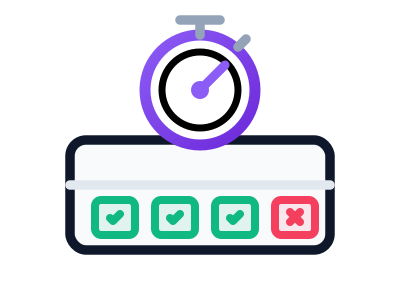
Cron Rabbit operates on a heartbeat monitoring (or 'dead-man's switch') principle. Instead of waiting for an error alert from a failed GitHub runner, your script sends a simple curl ping to Cron Rabbit at the end of its run. If GitHub Actions is down and the cron job fails to run, Cron Rabbit notices the missing ping and instantly alerts your on-call team.
2. Get Real-Time Third-Party Visibility with CloudStatusHQ
Why waste engineering hours diagnosing a cloud platform's outage?
CloudStatusHQ is a consolidated third-party dependency health aggregator. It monitors upstream services like GitHub, AWS, Vercel, and Cloudflare in real-time. By integrating CloudStatusHQ alerts into your team's Slack or PagerDuty, your engineers will instantly know if a pipeline failure is due to a regional GitHub outage, allowing them to pause deployments and avoid unnecessary debugging cycles.
3. Maintain Trust with Status Navigator
When upstream outages affect your own SaaS platform's deployments or scheduled tasks, transparency is key to retaining user trust.
With Status Navigator, you can quickly publish incident updates on custom-branded, highly reliable status pages. Because Status Navigator operates completely independent of your primary hosting and CI/CD infrastructure, your customers will always have access to real-time system status updates even during major third-party cloud blackouts.
Conclusion
Third-party downtime is an inevitable reality of the modern web. However, with proactive monitoring strategies in place—using CloudStatusHQ for dependency visibility and Cron Rabbit to prevent silent cron job failures—your team can maintain operational resilience and minimize developer frustration.