SRE Best Practices: Managing Dynamic Feature Flags in Serverless Environments
Amazon Web Services (AWS) recently highlighted a powerful pattern for modern applications: implementing dynamic feature flags on AWS Lambda using AWS AppConfig. This approach allows DevOps and SRE teams to toggle features, adjust operational limits, and safely test new code in production without triggering full deployment pipelines.
While dynamic configurations reduce deployment friction and minimize cold-starts by decoupling configuration from code, they introduce unique runtime risks. A misconfigured flag can instantly degrade a serverless function, causing silent background failures or partial system outages.
The SRE Angle: Mitigating Configuration Failures
To safely leverage dynamic feature flags in a serverless environment, SRE teams must implement robust monitoring and fallback strategies:
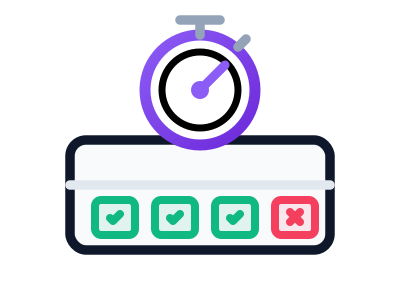
- Monitor Background Failures with Cron Rabbit: Serverless functions running cron jobs or event-driven tasks can fail silently if a bad configuration flag is rolled out. Since these aren't always tied to user-facing API endpoints, standard APM tools might miss the error. Cron Rabbit acts as a dead man's switch, expecting regular curl pings from your cron-driven Lambdas. If a dynamic flag halts your background tasks, Cron Rabbit alerts your team immediately.
- Check Cloud Provider Outages with CloudStatusHQ: Dynamic configuration flags rely on external services like AWS AppConfig. If an AWS outage occurs, Lambda functions may fall back to default values or throw execution timeouts. CloudStatusHQ aggregates third-party vendor status, letting you immediately differentiate between a bad local configuration change and an AWS platform degradation.
- Maintain User Trust with Status Navigator: When a bad runtime configuration does escape to production, transparency is key. Status Navigator enables DevOps teams to spin up custom-branded status pages to communicate incident status and resolution progress clearly, maintaining customer trust while SREs rollback the problematic feature flag.
Source Link
news.google.com